Quoting is unpaid work, so keep it lean
Every quote you write is work nobody pays for until the customer says yes. Some of that is unavoidable. You need to understand the job, price it properly and put it in writing. But a lot of quoting time goes on things that add nothing: driving out to look at a tap, chasing a customer who never picks up, or guessing what "the toilet's broken" actually means.
Here are five of the most common time sinks in plumbing quotes, and what to do about each one. None of them need an office admin.
1. The "can you just come have a look?" visit
The problem: A customer rings about a leaking tap. You drive over and it's a worn washer or cartridge. A small job, and the travel ate most of the margin. Or you get there and find a mixer you don't carry parts for, so you have to come back anyway.
The fix: Ask for photos before you commit to a visit. For a leaking tap, ask for these.
From those you can usually tell whether it's a straight repair, a replacement, or something bigger like a failing flexi hose or a water-damaged cabinet. You also know which parts to bring. Be straight with the customer if the photos aren't enough. Some leaks only make sense once the tap is apart.
2. Phone tag
The problem: The customer calls while you're under a house. You call back at lunch and they're at work. By the time you actually talk, they may have rung someone else.
The fix: Take the first conversation out of the phone call. Reply with a text that has a link to a short set of questions and photo requests. The customer answers when it suits them, whether that's on a lunch break or on the couch at night, and you read it when you've got a minute. You only pick up the phone when there's something worth talking about.
3. Vague job descriptions
The problem: "My toilet's broken." Is it running constantly? Not filling? Leaking at the base? Blocked? Each one is a different diagnosis, different parts and a different price. Customers aren't being difficult. They just don't know the words for what's going on.
The fix: Ask questions that let the customer describe the symptom without knowing the cause. For a toilet, something like:
- Is there water on the floor around the base?
- Does the cistern keep running or refilling on its own?
- When you flush, is it weak, normal, or does it overflow?
- Is this the only toilet in the house?
Then ask for a photo of the toilet and cistern, one of the base, and one of the stop tap if they can find it.
The same idea works for blocked drains. Ask which drain is blocked, how bad it is, how long it has been happening and whether they've already tried anything, like a plunger or a drain cleaner. Ask for a photo of the drain and of any water backing up.
4. Spending real effort on jobs you were never going to win
The problem: A bigger job like a hot water replacement takes proper time to quote. Sometimes the customer was only collecting prices for next year, or wanted something quite different from what you priced.
The fix: Do a quick first pass from photos and answers before you put in the detailed effort. For a hot water job, the first pass tells you a lot:
- What type of system they have now, and where it sits
- The data plate, which gives you the details of the existing unit
- The installation area, so you can see access, clearances and the condition of the connections
- What they'd like to change to, and how many people live in the house
- What's happening now: no hot water, not enough, a leak, or just planning ahead
A customer with no hot water today is ready to book. A customer "thinking about going electric at some point" might need a ballpark and a follow-up later, not a fully itemised quote this afternoon. You still decide. You're just deciding with more information.
5. Writing quotes from memory
The problem: You look at the job, then write the quote that night from notes scribbled on the back of an invoice book. You forget the extra isolation valve or the tight access under the house, then either wear the cost or have an awkward conversation later.
The fix: Keep the photos and answers with the quote. When you sit down to price it, everything you saw is in front of you. Write a clear list of what's included and, just as important, what isn't.
When you still need to go out
A sensible middle ground is to quote the clear jobs from photos and use the photos to prepare for the visits you still do. You turn up knowing what to bring, which saves the second trip.
The five fixes at a glance
| Time sink | What to change |
|---|---|
| Unnecessary site visits | Ask for specific photos first |
| Phone tag | Send a link the customer fills in when it suits them |
| Vague descriptions | Ask about symptoms, not causes |
| Jobs you won't win | Do a quick first pass before a detailed quote |
| Quoting from memory | Keep the photos and answers with the quote |
How QuoteSnap fits
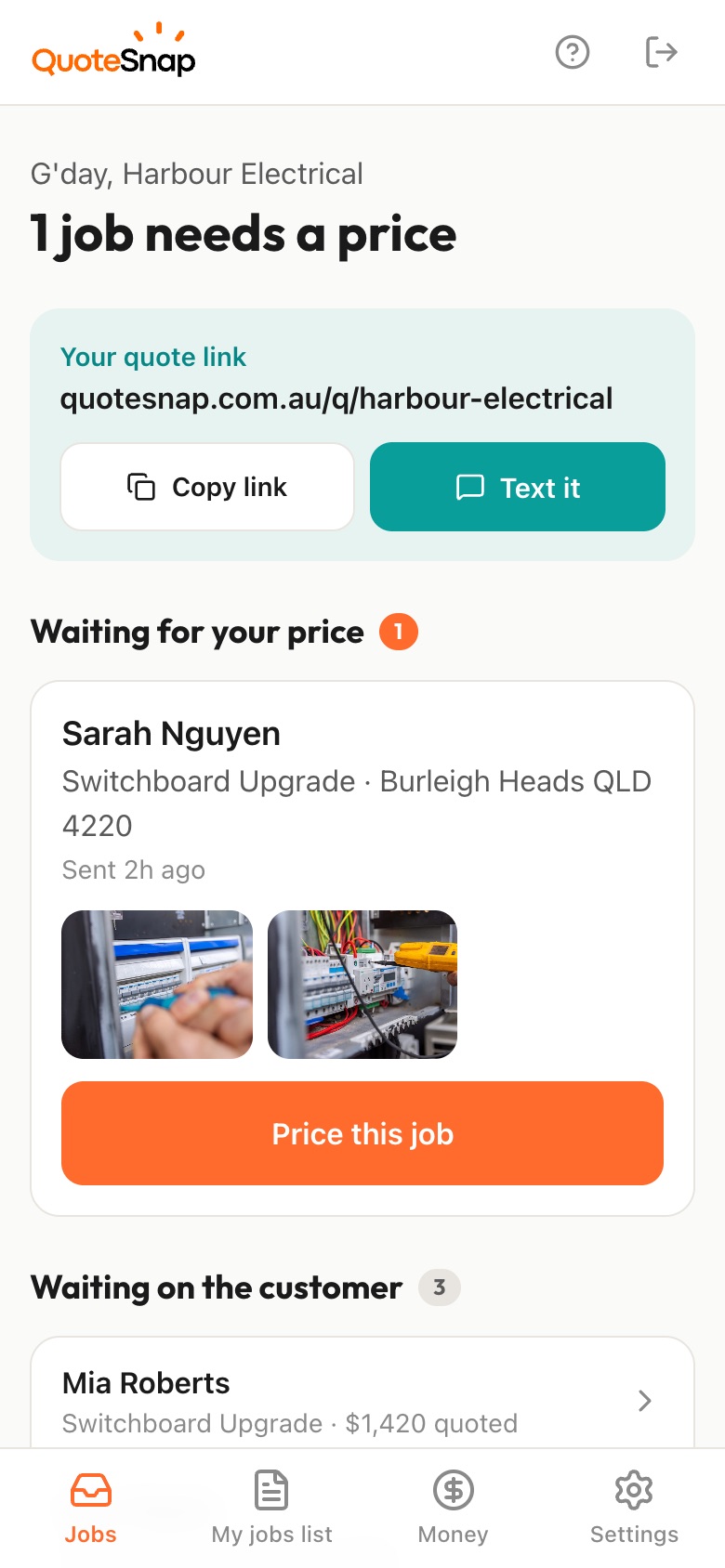
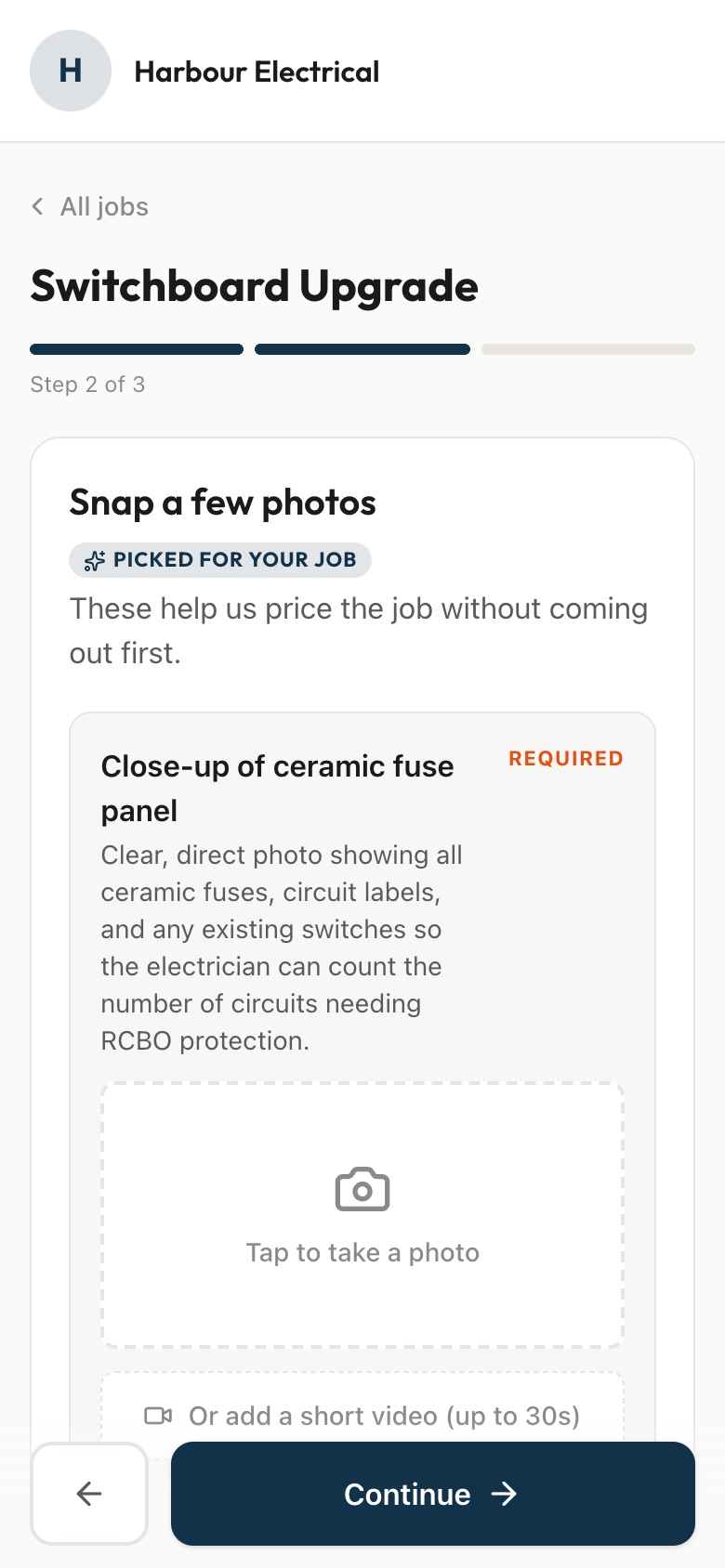
QuoteSnap for plumbers has ready-made forms for hot water systems, blocked drains, leaking taps and gas fitting, and you can edit any of them:
Questions
- What do you need?Replace existing system / New installation / Repair existing / Not sure - need advice
- What type of hot water system do you currently have?Electric storage tank / Gas storage tank / Gas instant/continuous / Solar / Heat pump / No system currently / Not sure
- What type would you like?Same as current / Electric storage / Gas storage / Gas instant / Solar / Heat pump / Not sure - want advice
- How many people in your household?1-2 / 3-4 / 5-6 / 7+
- Where is your current hot water system?Outside - ground level / Outside - on roof / Inside - laundry / Inside - garage / Inside - other / Not sure
- What's the current issue (if any)?No hot water / Not enough hot water / Leaking / Strange noises / Old/end of life / No issue - just upgrading
Photos
- Current hot water unitPhoto of your existing hot water system, showing the full unit and any labels/stickers
- Data plate/labelClose-up of the data plate or label showing the model number and specifications
- Installation areaWider photo showing the area around the hot water system and available space
You text or email the link, and the customer answers and takes photos on their phone with nothing to download. Artificial intelligence (AI) checks each photo as it comes in and asks them to retake it if it's blurry, too dark or not of the job. The request lands with a short AI summary of what's in the photos and anything to check, like access or missing information. For other jobs, type the job name and AI writes the questions and photo requests for you to check and edit.
You price it on your phone and send the quote by text or email with a list of what's included. The customer signs to accept on the same link.
For more on getting usable photos, see what photos to ask customers for. Plans start at $4.99 a month after 7 days free, with unlimited quote requests. See pricing for the details.
The short version
- Ask for specific photos before you commit to a visit
- Send a link the customer fills in when it suits them
- Ask about symptoms, not causes
- Do a quick first pass before a detailed quote
- Keep the photos and answers with the quote, and list what isn't included
- Go out when the photos aren't enough
Free download
Hot water and drain quote checklist
What to ask before you price a hot water or blocked drain job.
We'll send the odd quoting tip. Unsubscribe any time.
Send your next quote link today.
Pick a form for your trade, copy your link, and send it to your next enquiry. 7 days free. Cancel any time.
Start free trial